
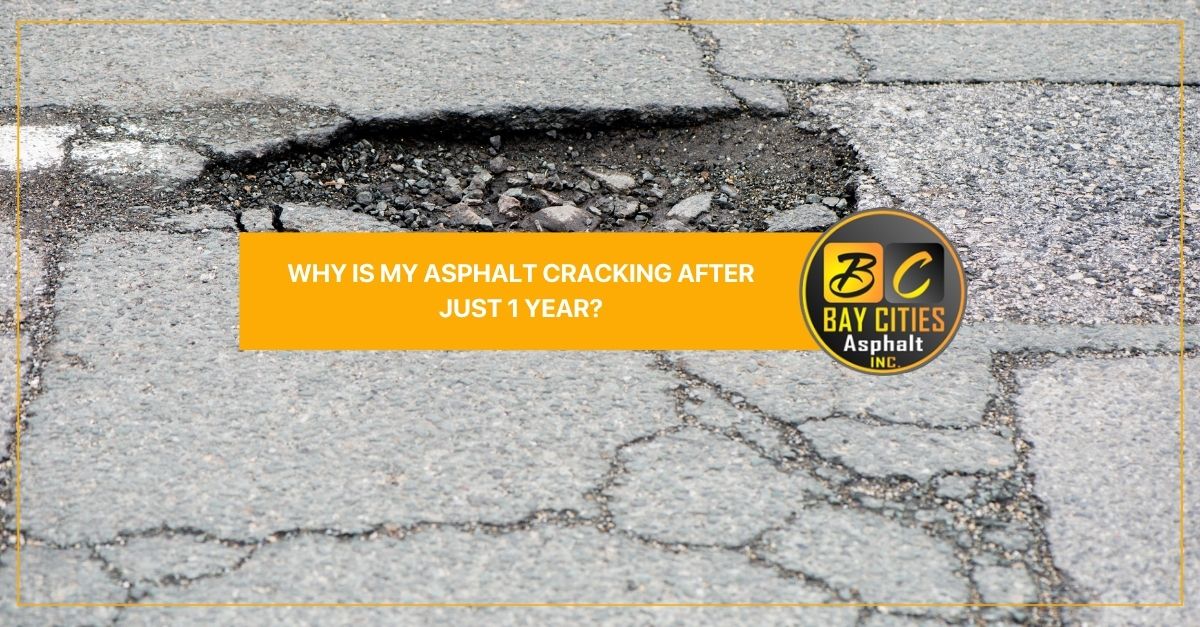
You invested in a fresh asphalt driveway or parking lot, and now—barely a year later—you’re staring at cracks spreading across the surface. Frustrating, right? Asphalt cracking this soon isn’t what you expected. You expected your new pavement to last decades, not develop problems before its first birthday.
The good news is that early cracking usually points to a handful of specific causes. Once you understand what’s happening beneath the surface, you can take steps to fix the problem and prevent it from coming back.
At Bay Cities Asphalt, we’ve been laying and repairing asphalt since the 1990s. In this guide, we’ll walk through the most common reasons new asphalt cracks early, what role your location and traffic play, and how to protect your investment for the long haul.
The Short Answer: Asphalt Shouldn’t Crack This Soon
Quality asphalt installed correctly should hold up for 15 to 20 years before showing major wear. When cracks appear within the first 12 months, it almost always signals one of three issues: a poor installation, an inadequate base, or stress from heavy use the surface wasn’t designed to handle.
Let’s break down each of these factors so you can pinpoint what went wrong.
Was the Base Prepared Properly?
The base is the foundation of any asphalt surface, and it matters more than the asphalt itself. A strong base—usually made of compacted gravel or crushed stone—spreads out the weight of vehicles and keeps the surface stable.
When the base is too thin, poorly compacted, or built on soft soil, the asphalt above it has nothing solid to rest on. Over time, the surface flexes and shifts under pressure, and cracks form. This is one of the most common reasons new pavement fails early.
A proper base should be:
- Compacted thoroughly to remove air pockets and create a dense, stable layer
- Thick enough for the expected load, with heavier traffic areas requiring more depth
- Well-drained so water doesn’t collect and weaken the foundation
If your contractor rushed the base preparation or skipped steps, early cracking is often the result.
Does Your Location Affect Asphalt Cracking?
Where you live plays a bigger role than many people realize. The climate, soil type, and weather patterns in your city all influence how asphalt holds up.
Freeze-Thaw Cycles
In areas with cold winters, water seeps into tiny gaps in the asphalt, freezes, and expands. This expansion pries the cracks wider. When the ice melts, the gaps stay larger—and the cycle repeats with every cold snap. Regions with frequent freezing and thawing see faster cracking than warmer climates.
Heat and Sun Exposure
On the flip side, intense heat and UV rays dry out asphalt and make it brittle. Brittle asphalt cracks more easily under stress. Surfaces in hot, sunny regions need regular sealcoating to stay flexible and protected.
Soil Conditions
Expansive clay soils swell when wet and shrink when dry. This constant movement underneath the pavement puts stress on the surface and can lead to cracks, no matter how well the asphalt was laid.
How Many Drivers Use the Surface?
Traffic volume has a direct impact on how quickly asphalt wears down. A residential driveway used by two cars faces far less stress than a busy commercial parking lot with hundreds of vehicles a day.
The more frequently a surface is driven on, the faster it experiences fatigue. Repeated pressure from constant traffic wears down the asphalt and the base beneath it. If your pavement handles heavy daily use but was built to residential standards, early cracking is almost inevitable.
When planning an asphalt project, it’s important to match the construction to the expected traffic. A surface designed for light use simply won’t hold up under commercial demands.
Is Vehicle Weight Causing the Damage?
Weight matters just as much as volume. Heavy vehicles—delivery trucks, RVs, dumpsters, and construction equipment—place enormous pressure on asphalt.
When a surface built for passenger cars regularly supports heavy loads, the asphalt begins to deform. You may notice cracks, depressions, or grooves where the weight concentrates. This is especially common in:
- Loading and unloading zones where trucks sit for long periods
- Driveways where RVs or trailers are parked
- Commercial lots that see regular delivery traffic
If heavy vehicles use your pavement, the asphalt and base both need to be built to handle that weight from the start.
Other Common Causes of Early Cracking
Beyond base, location, and traffic, a few other factors can lead to premature cracking:
- Poor drainage: Standing water weakens both the surface and the base. Proper grading and drainage are essential.
- Thin asphalt layer: If the asphalt itself is applied too thin, it won’t have the strength to resist cracking.
- Skipping sealcoating: Sealcoating protects asphalt from water, sun, and chemicals. Without it, the surface deteriorates faster.
- Installation during bad weather: Laying asphalt in cold or wet conditions affects how well it bonds and cures.
How to Prevent Asphalt From Cracking Early
The best defense against early cracking is doing things right from the start. Here’s how to protect your pavement:
- Hire an experienced contractor. Proper installation is the single most important factor in long-lasting asphalt.
- Invest in a solid base. Don’t cut corners on the foundation—it’s where durability begins.
- Sealcoat regularly. Apply a fresh sealcoat every two to three years to keep the surface protected.
- Fix small cracks fast. Filling minor cracks early stops water from getting in and causing bigger problems.
- Match the surface to its use. Make sure your pavement is built for the traffic and weight it will carry.
Protect Your Investment With the Right Team
Asphalt cracking within a year usually traces back to a weak base, the wrong build for your traffic and weight needs, or environmental stress from your local climate. The encouraging part? Most of these issues can be repaired—and prevented from returning—with proper work from a contractor who knows the craft.
If your asphalt is cracking too soon, don’t wait for small problems to become expensive ones. Bay Cities Asphalt has specialized in asphalt, concrete, and more since the 1990s, and we know what it takes to build surfaces that last. Reach out today for an inspection and let us help you get your pavement back in shape.