
When a customer or client visits your property, their experience begins long before they walk through your front door. It starts the moment they pull off the road, where asphalt striping and pavement condition immediately set expectations. The condition of your parking lot sets the tone for your entire business. A lot that is riddled with potholes, faded lines, and confusing arrows signals neglect. Conversely, a smooth, jet-black surface with crisp, bright striping communicates professionalism, attention to detail, and a commitment to safety.
While many property owners focus heavily on the interior of their buildings or their digital presence, the exterior physical infrastructure is just as critical. Asphalt striping and pavement markings are not merely decoration; they are the visual language that guides vehicles and pedestrians safely through your property. A well-designed layout minimizes confusion, maximizes capacity, and keeps you on the right side of the law.
Effective parking lot management requires understanding that paint on pavement serves multiple complex functions. From ensuring compliance with federal regulations to optimizing the flow of traffic during peak hours, the layout of your lot can directly impact your bottom line. This guide explores why prioritizing high-quality asphalt striping is a smart investment for any property manager or business owner.
Prioritizing Pedestrian and Vehicle Safety
The primary function of any parking lot layout is safety. Without clear direction, a parking area becomes an open field for chaotic driving. Drivers may cut across lanes, park in fire zones, or block entrances, creating hazardous conditions for everyone involved.
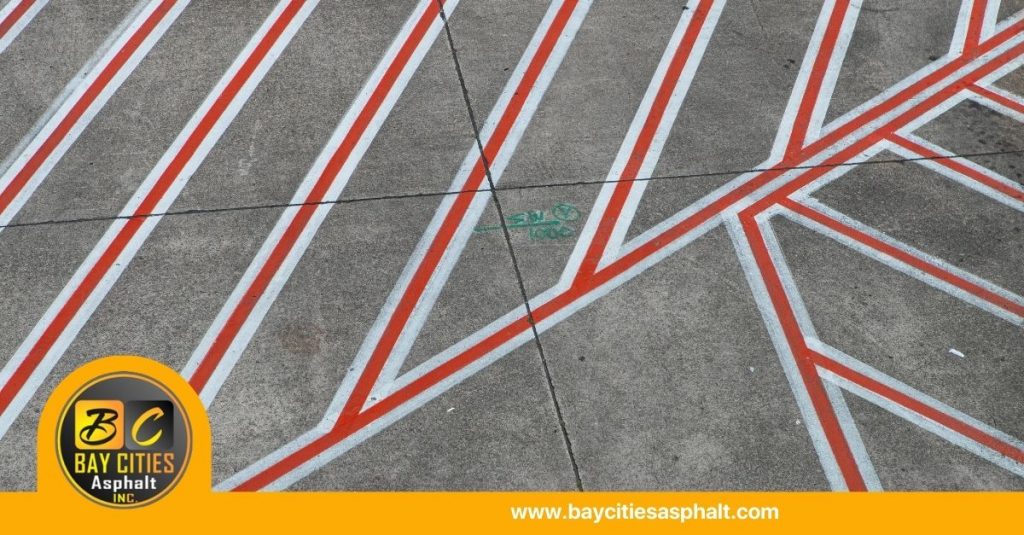
Clear, visible striping dictates the rules of the road on private property. Stop bars, loading zones, and directional arrows eliminate ambiguity. When drivers know exactly where to go, they are less likely to make erratic maneuvers that lead to fender benders. Furthermore, defined traffic lanes help separate incoming and outgoing traffic, reducing the risk of head-on collisions or sideswipes in tight corners.
Pedestrian safety is equally important. In a busy commercial lot, people are constantly walking between their cars and the building entrance. High-visibility crosswalks tell drivers to slow down and look out for foot traffic. Designated walkways guide pedestrians along safe routes, keeping them away from blind spots or high-traffic thoroughfares. By clearly marking these zones, you significantly lower the liability risk associated with accidents on your property.
Navigating ADA Compliance and Regulations
One of the most critical aspects of asphalt striping is compliance with the Americans with Disabilities Act (ADA). Failure to adhere to these federal regulations can result in hefty fines, legal action, and a tarnished reputation. ADA compliance is not optional, and the requirements are specific.
A compliant parking lot must have a designated number of accessible parking spaces based on the total number of parking spots available. These spaces must be located on the shortest accessible route of travel to an accessible facility entrance. But it goes beyond just painting a blue box.
Key ADA Striping Requirements include:
- Van Accessibility: A certain percentage of accessible spaces must be van-accessible, requiring wider access aisles to accommodate wheelchair lifts.
- Access Aisles: These must be marked with hatch marks to discourage other vehicles from parking in them, ensuring there is room for a wheelchair user to exit their vehicle safely.
- Signage and Color: The classic international symbol of accessibility must be visible, usually in blue and white. The paint used must be slip-resistant to prevent falls.
Professional asphalt contractors understand the nuances of these regulations. They ensure that slopes are correct, markings are distinct, and signs are mounted at the proper height. Ignoring these details is a risk no property owner should take.
Maximizing Parking Capacity and Flow
Land is expensive, especially in the Bay Area. If you own a commercial property, you want to maximize the utility of every square foot of pavement. A poorly designed layout can result in wasted space, reducing the number of cars your lot can accommodate. This is a direct loss of potential revenue if customers leave because they cannot find a place to park.
Optimization involves choosing the right parking angle. Straight (90-degree) parking usually allows for the most cars in a given area but requires wider driving lanes for maneuverability. Angled parking (45 or 60 degrees) is often easier for drivers to navigate and allows for narrower lanes, which can be ideal for one-way traffic patterns.
An expert contractor will analyze the geometry of your lot to determine the most efficient configuration. They look for “dead zones” that can be converted into compact car spaces or motorcycle parking. They also analyze traffic flow to prevent bottlenecks at entrances and exits. A good layout ensures that vehicles circulate smoothly, even during the busiest times of the day, preventing jams that frustrate visitors.
Curb Appeal and Brand Perception
We often judge books by their covers and businesses by their exteriors. Fresh, bright pavement markings on a dark, newly sealed asphalt surface look sharp. It creates an immediate visual contrast that implies the property is well-maintained and successful.
Faded, peeling, or missing lines suggest the opposite. They make a property look aged and distressed. For retail centers, hotels, and office parks, aesthetic appeal is a major component of attracting tenants and customers. If the exterior looks run-down, potential clients may assume the interior management is equally lax.
Routine maintenance, including sealcoating and re-striping, preserves the asphalt itself. Paint creates a minor barrier against the elements, but more importantly, the process of cleaning and preparing the lot for striping often reveals minor cracks or drainage issues that can be repaired before they become major, expensive failures. Maintaining the aesthetics of your lot is effectively maintaining the value of your real estate asset.
Trusting Experience: The Bay Cities Asphalt Difference
Achieving the perfect balance of safety, compliance, and aesthetics requires more than a bucket of paint and a roller. It requires professional expertise and a deep understanding of local paving standards. This is where experience becomes your most valuable asset.
Bay Cities Asphalt, Inc. brings a legacy of quality to every project. As a family-owned and operated business for the last two decades, we understand the specific needs of properties in the Bay Area. Our company has been passed down through three generations, meaning asphalt is quite literally in our blood.
We specialize in the full lifecycle of pavement management. Whether you need complete replacement and repair, precision milling, or an asphalt overlay to give your lot a brand-new surface, our team has the equipment and the skilled labor to execute the job correctly. We treat every project as if it were our own property, ensuring that your striping is straight, your layout is logical, and your compliance is guaranteed.

Securing Your Investment
Your parking lot is a significant capital investment. Protecting it requires regular attention and professional care. A strategic layout does more than tell cars where to park; it protects pedestrians, welcomes customers, and maximizes the efficiency of your space.
Don’t let faded lines or a confusing layout become a liability for your business. Assess your current pavement markings. Are they visible at night? Do they meet current ADA standards? Is the flow of traffic smooth, or are there constant bottlenecks? If you answered poorly to any of these, it is time to call in the professionals.
A fresh coat of paint can revitalize your property’s appearance and functionality overnight. By partnering with experienced contractors who understand the intricacies of asphalt and concrete work, you ensure that your property remains safe, attractive, and compliant for years to come.