
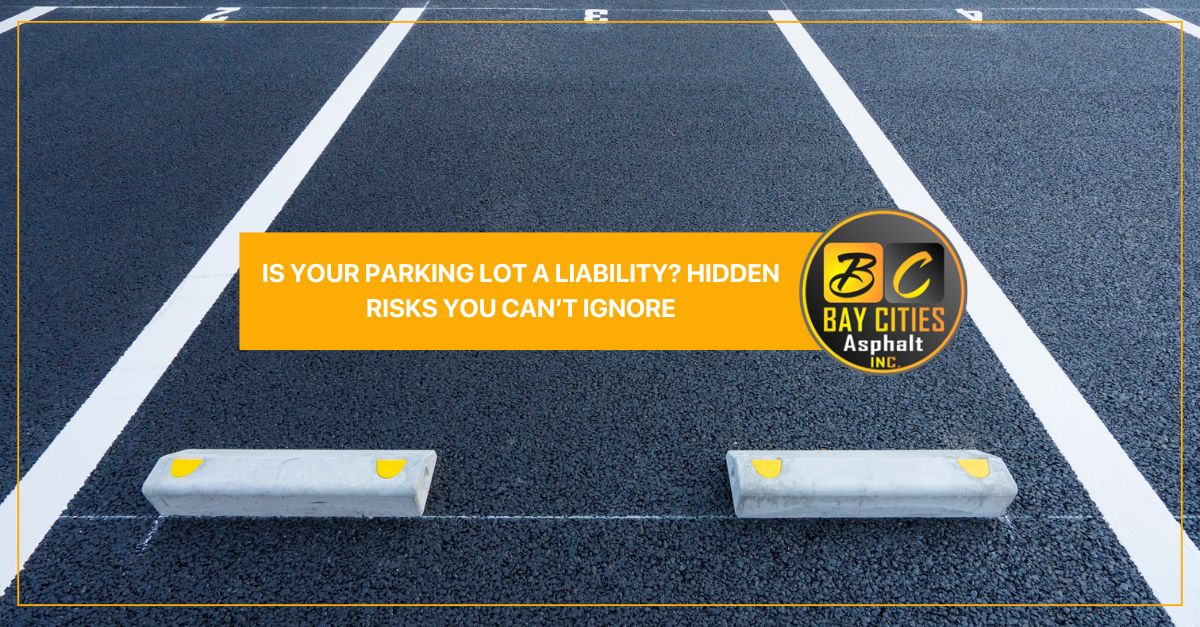
For many business owners and property managers, the parking lot is simply a necessity—a place for customers and employees to leave their vehicles. However, without consistent parking lot maintenance, this overlooked space can quickly deteriorate and turn a mundane asset into a significant financial and legal liability.
A single pothole or a faded striping line might seem like a minor aesthetic issue, but poor parking lot maintenance often signals negligence to insurers and attorneys. When a customer trips on uneven pavement or a visitor struggles to navigate your lot due to poor ADA compliance, the consequences can extend far beyond a bad review.
Understanding the specific risks hidden in your pavement is the first step toward protecting your business. From the legal ramifications of “slip and fall” incidents to the strict mandates of the Americans with Disabilities Act (ADA), proactive maintenance is not just about curb appeal—it is a critical strategy for risk management.

The High Cost of Trip and Fall Hazards
“Slip and fall” or “trip and fall” accidents are among the most common liability claims filed against commercial property owners. While asphalt is durable, it is not invincible. Over time, weather, vehicle weight, and ground movement cause degradation that creates dangerous surfaces.
Common Hazards to Watch For
- Potholes: These are obvious dangers, formed when water seeps into cracks, freezes or expands, and breaks the pavement apart. A pedestrian stepping into a pothole can easily twist an ankle or suffer worse injuries.
- Root Damage: Trees provide necessary shade, but their roots can push asphalt upward, creating raised ridges that catch unsuspecting feet.
- Alligator Cracking: When a network of cracks resembles alligator skin, it indicates sub-base failure. Loose chunks of asphalt can become debris that leads to falls.
- Differential Settlement: Where asphalt meets concrete (like a sidewalk or gutter pan), the two materials often settle at different rates. If the transition isn’t flush, it creates a vertical trip hazard.
In legal terms, property owners have a duty of care to maintain safe premises. If you knew—or should have known—about a hazard and failed to fix it, you could be held liable for medical bills, lost wages, and pain and suffering.
Navigating the Minefield of ADA Compliance
While trip hazards are often the result of wear and tear, ADA compliance issues can exist even in a newly paved lot if the design was flawed. The Americans with Disabilities Act sets strict federal standards for accessible design, and failure to comply can lead to costly lawsuits and federal fines.
In California, where litigation regarding accessibility is particularly active, ensuring your lot meets these standards is non-negotiable.
Critical Compliance Areas
Slope and Grade: Accessible parking spaces and the aisles next to them must be nearly level in all directions. A slope that is too steep makes it difficult or dangerous for someone using a wheelchair to transfer in and out of a vehicle.
Van Accessibility: You must have the correct number of van-accessible spaces, which require wider access aisles to accommodate wheelchair lifts.
Signage and Striping: The blue lines and international symbols of accessibility must be crisp and visible. Upright signs must be at the correct height and contain the specific language required by law.
Unfortunately, many business owners only discover their lot is non-compliant after they receive a legal complaint. “Drive-by” lawsuits, where plaintiffs specifically look for technical violations, are a reality for businesses in Solano County, Santa Clara County, and beyond.
Insurance Risk and Premiums
Your insurance carrier cares deeply about the condition of your parking lot. When an underwriter assesses your property for a commercial general liability policy, they are looking for risk.
A well-maintained lot suggests a conscientious owner who manages risk effectively. Conversely, a lot full of cracks, faded lines, and drainage issues signals deferred maintenance. This perception can lead to higher premiums or, in severe cases, a denial of coverage.
Furthermore, if you do face a claim, your history of maintenance becomes evidence. If you can prove you have a regular schedule for sealcoating, crack filling, and inspections, you demonstrate a commitment to safety. If you have ignored the pavement for a decade, proving you weren’t negligent becomes much more difficult.
Proactive Maintenance: Your Best Defense
The most effective way to mitigate these liabilities is through a scheduled pavement maintenance plan. Waiting until the asphalt has completely failed is the most expensive option, both in terms of repair costs and potential liability exposure.
Routine Inspections
Walk your property specifically looking for liability issues. Check the transitions between walkways and the parking lot. Look for fading paint that might confuse drivers or pedestrians.
Crack Sealing and Sealcoating
Small cracks let water penetrate the base, leading to potholes. Filling cracks early stops this cycle. Sealcoating protects the asphalt from oxidation and oil spills, extending its life and providing a slip-resistant, jet-black finish that looks professional.
ADA Upgrades during Repaving
Whenever you resurface or restripe your lot, you are legally triggered to upgrade your accessible spaces to current code. This is the perfect time to correct slope issues or widen aisles to ensure you are fully compliant.
Serving Northern California’s Construction Needs
Geography plays a role in how your asphalt ages. The heat in Contra Costa and Solano counties can oxidize asphalt binders quickly, making them brittle. The heavy traffic in tech hubs like Santa Clara requires robust structural integrity.
Bay Cities Asphalt understands these local challenges. We proudly serve clients across Solano County, Contra Costa County, Sonoma County, Santa Clara, and surrounding areas. Our team specializes in identifying potential liabilities before they become lawsuits. Whether you need precise ADA striping, urgent pothole repair, or a complete resurface, we deliver construction solutions that prioritize safety and durability.
Protect Your Business from the Ground Up
Your parking lot is a significant investment, but it shouldn’t be a source of anxiety. By addressing trip hazards, ensuring strict ADA compliance, and maintaining a relationship with a trusted paving partner, you can turn a potential liability into a safe, welcoming entry point for your business.
Don’t wait for an accident to reveal the flaws in your pavement. Assess your risks today and take the necessary steps to secure your property.