
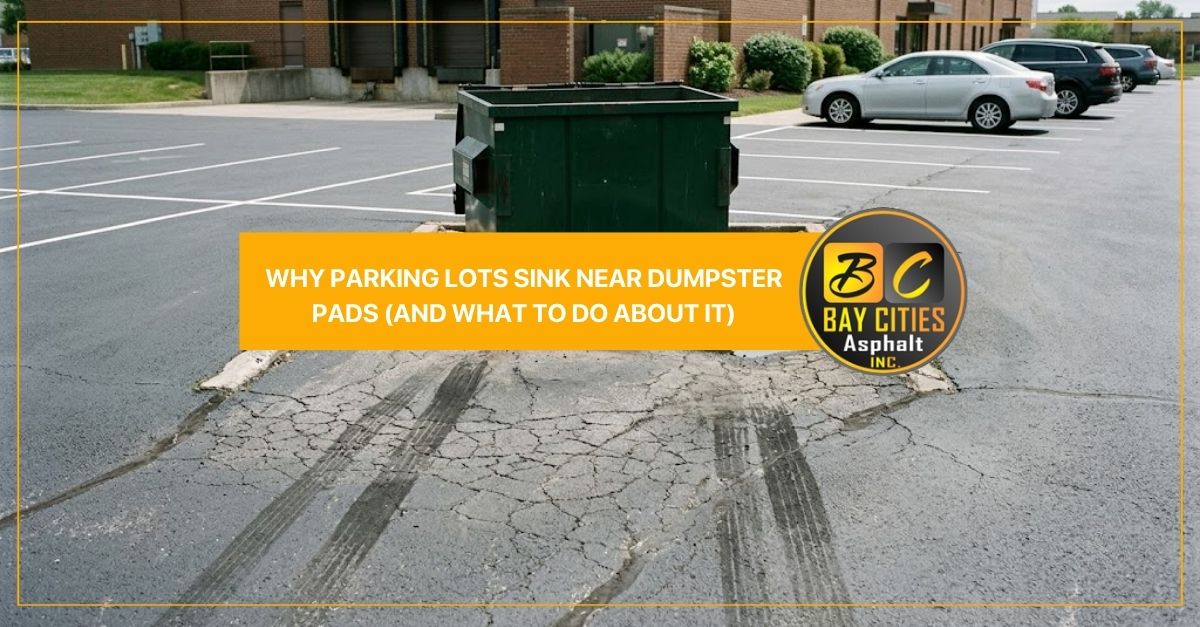
If you’ve noticed your parking lot developing cracks, depressions, or soft spots near the dumpster area, you’re not alone. Professional parking lot repair can prevent these issues from becoming larger structural problems. This is one of the most common asphalt problems commercial property owners face—and it’s rarely just a cosmetic issue. Left unaddressed, sinking asphalt near dumpster pads can worsen quickly, creating safety hazards, drainage problems, and costly repairs down the line.
The good news? Once you understand why it happens, you can take steps to fix it properly and prevent it from coming back. This post breaks down the main causes of parking lot sinking near dumpster pads and explains what kind of repair will actually hold up long-term.
What Makes Dumpster Pad Areas So Vulnerable?
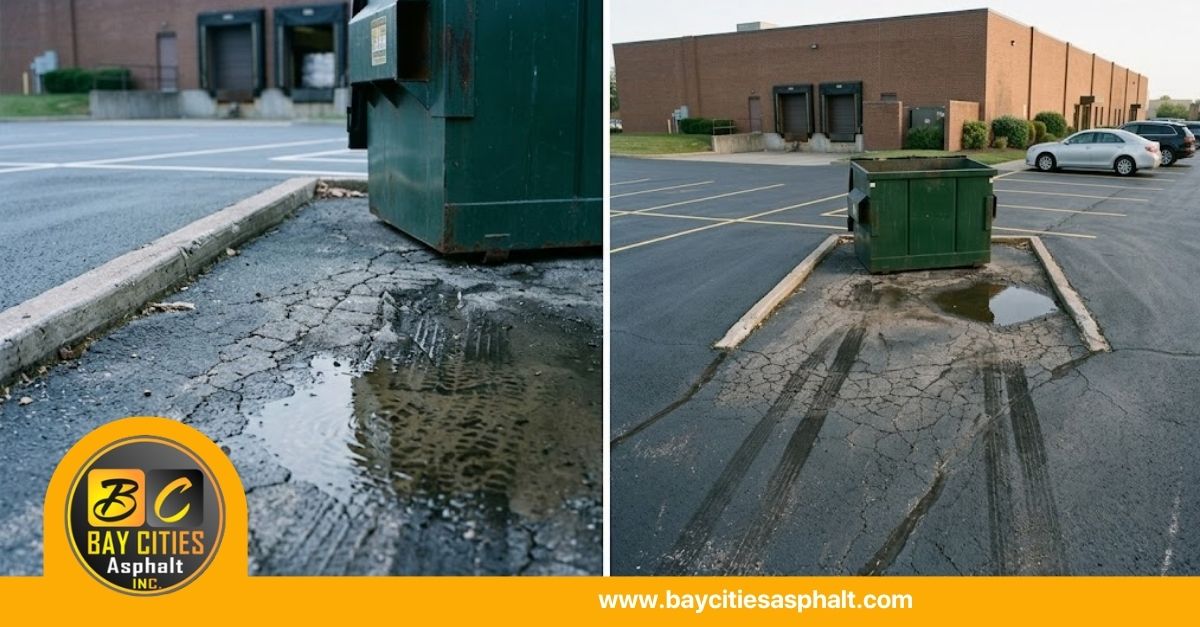
Dumpster pads take a beating that most other areas of your parking lot simply don’t. The combination of heavy, concentrated loads and frequent vehicle traffic creates conditions that standard asphalt just isn’t always built to withstand.
A commercial dumpster, when full, can weigh anywhere from 3,000 to 10,000+ pounds. Add the weight of a garbage truck rolling over the same spot week after week, and you have a recipe for accelerated wear. That repetitive stress, applied to a relatively small area, gradually weakens the asphalt and the base beneath it.
But weight alone isn’t always the culprit. Several other factors—often working together—cause the ground to shift and the surface to sink.
The Most Common Causes of Sinking Near Dumpster Pads
Poor Base Preparation During Original Construction
The strength of any asphalt surface starts below the surface. If the sub-base wasn’t properly compacted when the parking lot was first installed, it will eventually settle under heavy loads. Near dumpster pads, this settlement tends to be more dramatic because the stress is so concentrated.
A well-built asphalt section requires a stable, compacted aggregate base—typically several inches thick—before the asphalt layer is even poured. Cut corners here, and the surface above will pay the price. In many cases, parking lot repair begins with rebuilding the damaged base rather than simply replacing the asphalt surface.
Water Infiltration and Poor Drainage
Water is asphalt’s most persistent enemy. When rainwater pools near a dumpster pad and has nowhere to drain, it seeps into cracks and works its way down into the base layer. Over time, this saturates and softens the sub-base, causing the ground beneath the asphalt to shift.
This problem is especially pronounced in areas with clay-heavy soil, which expands when wet and contracts when dry. That constant movement puts the asphalt through repeated stress cycles—and eventually, it starts to sink or crack.
Dumpster areas often have drainage issues because they’re tucked away at the edges of parking lots where slope and drainage design may have been an afterthought during construction. A comprehensive parking lot repair plan should also correct drainage problems to prevent the damage from returning.
Leaking Dumpster Fluids
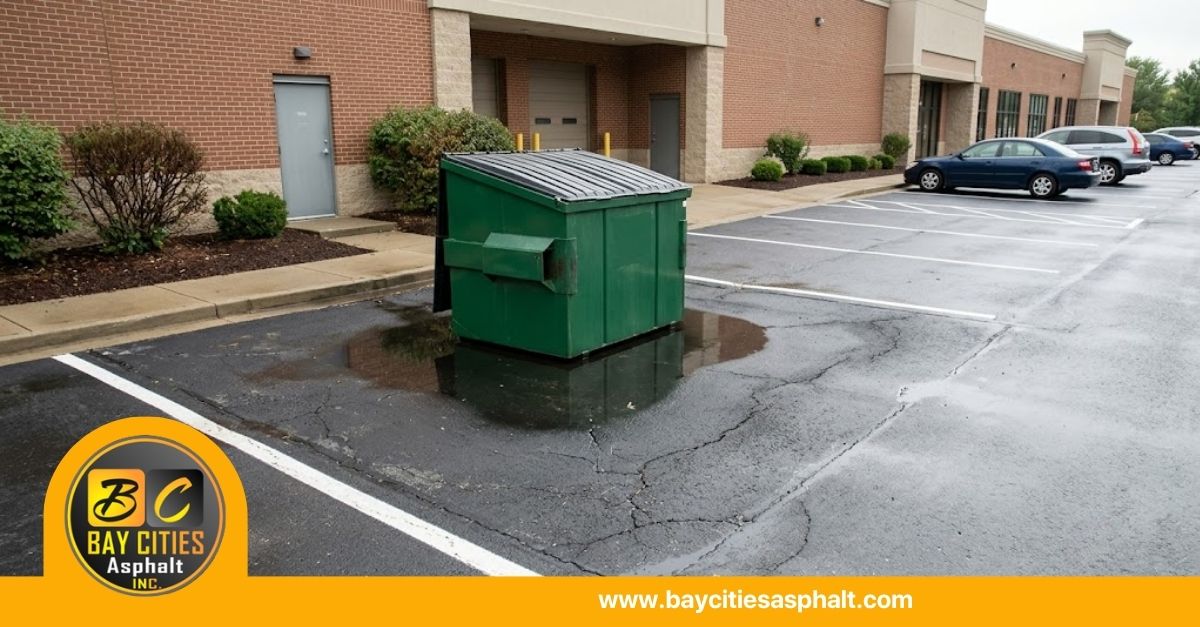
This one often goes overlooked. Dumpsters leak. Whether it’s water from rain, grease from food waste, or other organic fluids from general refuse, those liquids pool directly beneath and around the pad. Over time, certain fluids can actually break down the binders in asphalt, accelerating deterioration and weakening the material from the surface down.
Some fluids also promote soil erosion beneath the asphalt, creating voids that the surface eventually collapses into. If you’ve ever seen a depression that seems to grow suddenly, this is often why.
Repeated Heavy Vehicle Traffic in the Same Spot
Garbage trucks follow the same route, park in the same position, and apply massive downward force in exactly the same spots every pickup. This repeated loading—sometimes called “fatigue loading”—breaks down asphalt over time, even when the base is solid.
You’ll typically see this as alligator cracking (a web of interconnected cracks resembling alligator skin) before any visible sinking occurs. Once cracking reaches that stage, water infiltration accelerates the damage significantly.
Tree Roots and Organic Material
If your dumpster area is near any trees or landscaping, root intrusion can play a major role in pavement movement. Roots grow toward moisture—and if water collects near the dumpster pad, roots will follow. As they expand, they push upward against the asphalt, creating uneven surfaces and cracks that let even more water in.
Decomposing organic matter beneath the surface can also create voids as it breaks down, leaving the asphalt without solid support underneath.
Why You Shouldn’t Just Patch Over a Sinking Dumpster Pad
It’s tempting to fill a depression with a quick patch and move on. But if the cause of the sinking is a compromised sub-base, patching the surface does nothing to fix the underlying problem. You’re essentially covering up a weakening foundation with a thin layer of material that will crack and sink again—often within months.
A proper repair involves removing the damaged asphalt, assessing and correcting the base layer, improving drainage where needed, and then repaving with the right asphalt thickness and compaction for the level of load the area will experience. For dumpster pads specifically, this often means a thicker asphalt cross-section or even a concrete pad, both of which are better suited to handle the repeated heavy loads.
How to Prevent Dumpster Pad Sinking in the Future
Prevention is always cheaper than repair. A few key measures can extend the lifespan of your dumpster pad area significantly:
- Install proper drainage: Ensure water flows away from the dumpster area rather than pooling around it. This may involve regrading the surrounding asphalt or adding drainage inlets.
- Use the right asphalt mix: Heavy-duty areas benefit from a stiffer asphalt mix with a higher aggregate content, designed specifically to handle repeated heavy loads.
- Seal cracks early: Small cracks are easy and affordable to seal. Letting them grow gives water a direct route to the sub-base.
- Schedule regular inspections: Catching signs of base failure early—like slight depressions or alligator cracking—allows for less invasive repairs.
- Consider a concrete dumpster pad: Concrete handles concentrated, repetitive loads better than asphalt. In high-traffic dumpster areas, a concrete pad with asphalt transitions on either side is a long-lasting solution.
When to Call a Professional Asphalt Contractor
If the sinking near your dumpster pad covers a significant area, has been worsening over time, or keeps coming back after patching, it’s time to bring in a professional. A qualified asphalt contractor can assess the extent of base damage, identify drainage issues, and recommend a repair strategy that actually addresses the root cause. An experienced parking lot repair contractor will recommend the most effective solution based on the condition of your pavement.
Keep Your Parking Lot in Top Shape with Bay Cities Asphalt
Sinking asphalt near a dumpster pad is a fixable problem—but the fix needs to be done right. At Bay Cities Asphalt, we specialize in parking lot repair and replacement that addresses the real cause of the damage, not just the surface symptoms. Whether it’s a full dumpster pad replacement, base repair, or a full parking lot resurfacing, we bring the experience and equipment to get the job done properly.
We proudly serve property owners across Solano County, Contra Costa County, Sonoma County, Santa Clara, and the surrounding areas. If your parking lot is showing signs of stress near the dumpster area, reach out to our team for an assessment. A well-maintained parking lot reflects well on your business—and we’re here to help keep it that way.