
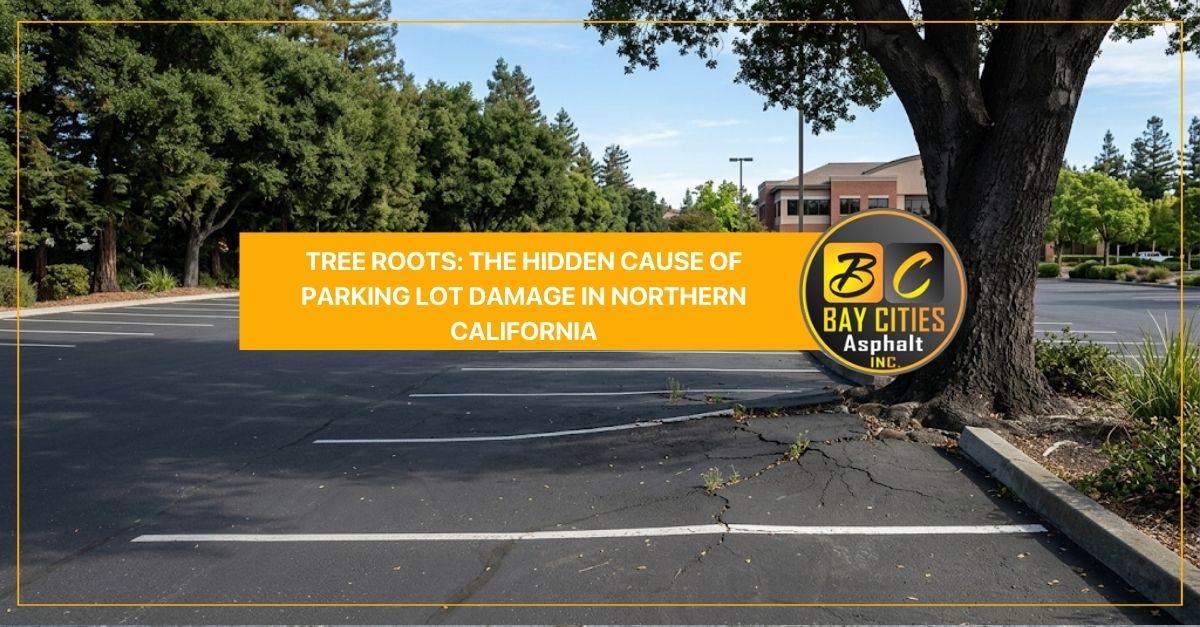
Northern California’s tree-lined streets and shaded parking lots are a welcome sight on a hot summer day. But beneath that appealing canopy, something destructive is quietly at work. Tree roots—often invisible until the damage is already done—are one of the leading causes of cracked, buckled, and deteriorating asphalt across the region. For property owners and facility managers in areas like Solano County, Contra Costa County, Sonoma County, and Santa Clara, understanding how root damage happens—and what to do about it—can save thousands of dollars in repairs down the road.
Why Tree Roots Are So Destructive to Asphalt
Asphalt may look solid, but it’s surprisingly vulnerable to biological pressure. Tree roots grow toward moisture and nutrients, and the soil beneath a parking lot often provides exactly that—especially near irrigation systems, drainage areas, and utility lines.
As roots expand, they push upward against the asphalt from below. Over time, even modest root growth generates enormous force. A single root can exert hundreds of pounds of pressure per square inch, enough to crack through several inches of pavement. What starts as a hairline fracture can quickly escalate into raised slabs, deep fissures, and full surface failure.
The problem is particularly common in Northern California for a few key reasons:
- Native and ornamental tree species like valley oaks, eucalyptus, and liquid ambars have aggressive, wide-spreading root systems.
- The wet-dry climate cycle causes soil to expand and contract seasonally, which amplifies the movement of roots beneath paved surfaces.
- Aging infrastructure means many parking lots in the region were installed without root barriers or adequate buffer zones between trees and asphalt.
What Root Damage Looks Like in a Parking Lot
Root damage doesn’t always announce itself dramatically. More often, it shows up gradually—and gets misidentified as general wear and tear. Here’s what to look for:
Raised or Buckled Pavement
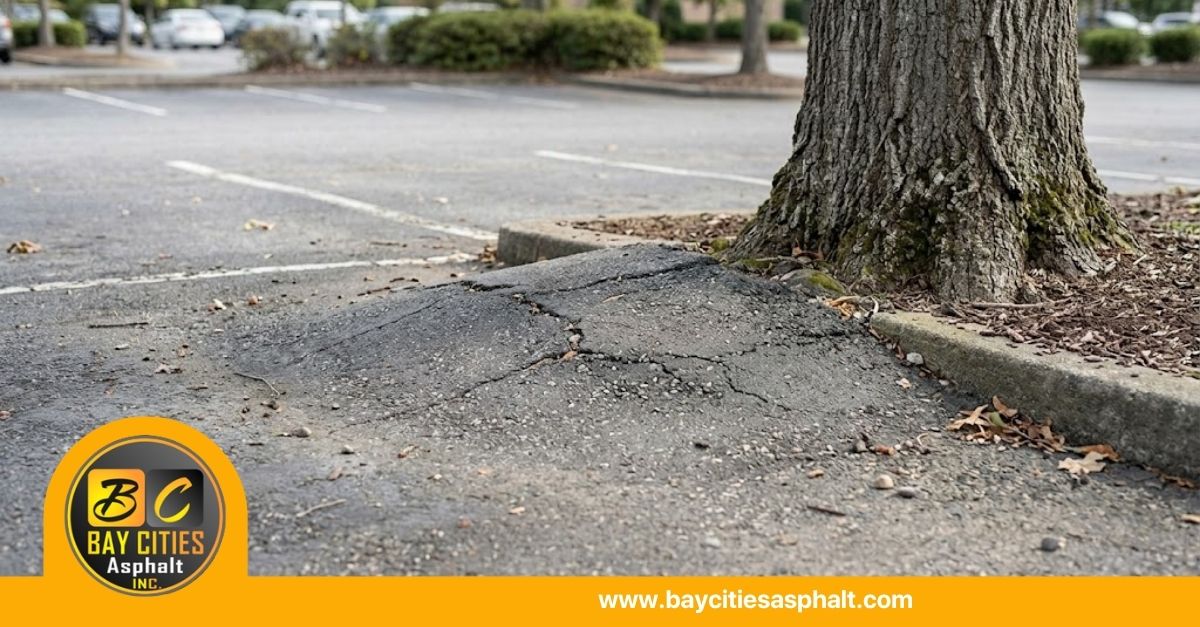
One of the most obvious signs is pavement that appears to be lifted or humped in a localized area, usually near the base of a tree. This happens when roots grow directly beneath the asphalt and push it upward.
Cracking Patterns Around Trees
Radial or spider-web cracking that originates near a tree’s root zone is a strong indicator of root pressure. Unlike standard fatigue cracking (which tends to be more uniform), root-related cracks often follow the direction of the roots themselves.
Surface Displacement
When sections of pavement shift horizontally or vertically, it can indicate that roots have disrupted the base layer beneath the asphalt. This kind of movement compromises the structural integrity of the entire surface.
Drainage Problems
Tree roots can also infiltrate and block drainage systems beneath parking lots, causing water to pool on the surface. Standing water accelerates asphalt degradation and creates safety hazards for pedestrians and vehicles.
The Cost of Ignoring Root Damage
Small cracks are cheap to fix. Left unaddressed, they become expensive problems.
Water enters through surface cracks, weakens the base layer, and creates potholes. Freeze-thaw cycles—even the mild ones Northern California experiences in winter—expand those cracks further. What might have been a straightforward repair becomes a full-depth replacement, with costs that can multiply significantly.
There’s also the liability side to consider. Raised pavement and potholes are tripping hazards. If a pedestrian is injured in your parking lot due to neglected surface damage, you may face legal and financial exposure that far exceeds the cost of timely repairs.
How to Manage Tree Root Damage in Parking Lots
The good news is that root damage is manageable—especially when caught early. Here are the main approaches property owners use:
Root Barriers
For new construction or major renovations, installing physical root barriers is the most effective preventive measure. These barriers (typically made from high-density polyethylene) redirect root growth downward and away from paved surfaces. They’re most effective when installed at the time of planting or paving.
Strategic Tree Removal or Pruning
In cases where a tree’s root system poses an ongoing threat to a large area of pavement, removal may be the most practical option. Root pruning—cutting back roots that have already encroached on the pavement—can also provide temporary relief, though roots will eventually regrow.
Asphalt Patching and Repair
For localized damage, targeted patching can restore surface integrity quickly and cost-effectively. This works best when the underlying cause (the root) is also addressed—otherwise, the patch will fail again within a few years.
Full Asphalt Replacement
When root damage is widespread or the pavement base has been severely compromised, full replacement is often the most economical long-term solution. New asphalt, properly installed with appropriate root management measures, can deliver decades of reliable performance.
Choosing the Right Repair Approach for Your Property
The right solution depends on a few factors: the severity of the damage, the species and size of the trees involved, the intended use of the parking lot, and your budget.
A qualified asphalt contractor familiar with Northern California’s conditions can assess the damage and recommend the most cost-effective path forward. They’ll look beyond the surface to evaluate the condition of the base layer, identify root intrusion points, and advise on whether patching or full replacement makes more sense for your situation.
Properties with heavy daily traffic—retail centers, office parks, apartment complexes—generally benefit from more durable, full-depth solutions that hold up under load. Lower-traffic lots may be candidates for targeted repairs that extend the life of the existing surface.
Protecting Your Parking Lot Long-Term
Prevention is always cheaper than repair. A few practices that can significantly reduce the risk of root damage over time:
- Plan tree placement carefully. Keep new plantings at least 10–15 feet from pavement edges, and avoid species known for invasive root systems in paved environments.
- Install root barriers proactively. When planting near existing pavement, root barriers should be considered standard practice, not an optional add-on.
- Schedule regular pavement inspections. Catching early-stage cracks before they develop into structural problems can dramatically reduce repair costs. Annual inspections are a reasonable starting point for most properties.
- Address drainage issues promptly. Water is asphalt’s biggest enemy. Any pooling or drainage problems near tree zones should be investigated immediately.
Don’t Let Root Damage Get Ahead of You
Tree root damage is incremental—it’s happening slowly, beneath the surface, long before it’s visible. By the time most property owners notice the problem, it’s already more advanced than they realize.
The parking lots that hold up best over time aren’t necessarily built from the most expensive materials. They’re the ones that receive consistent attention: regular inspections, prompt repairs, and smart long-term planning.
At Bay Cities Asphalt, we’ve helped property owners across Solano County, Contra Costa County, Sonoma County, Santa Clara, and surrounding Northern California communities assess and address parking lot damage of all kinds—including the complex, root-related issues that require more than a surface fix. Whether your lot needs targeted patching or a complete replacement, we bring the expertise to get it done right.
If you’ve noticed cracking, buckling, or uneven pavement near the trees in your parking lot, don’t wait for the problem to grow. Contact Bay Cities Asphalt today for a professional assessment.