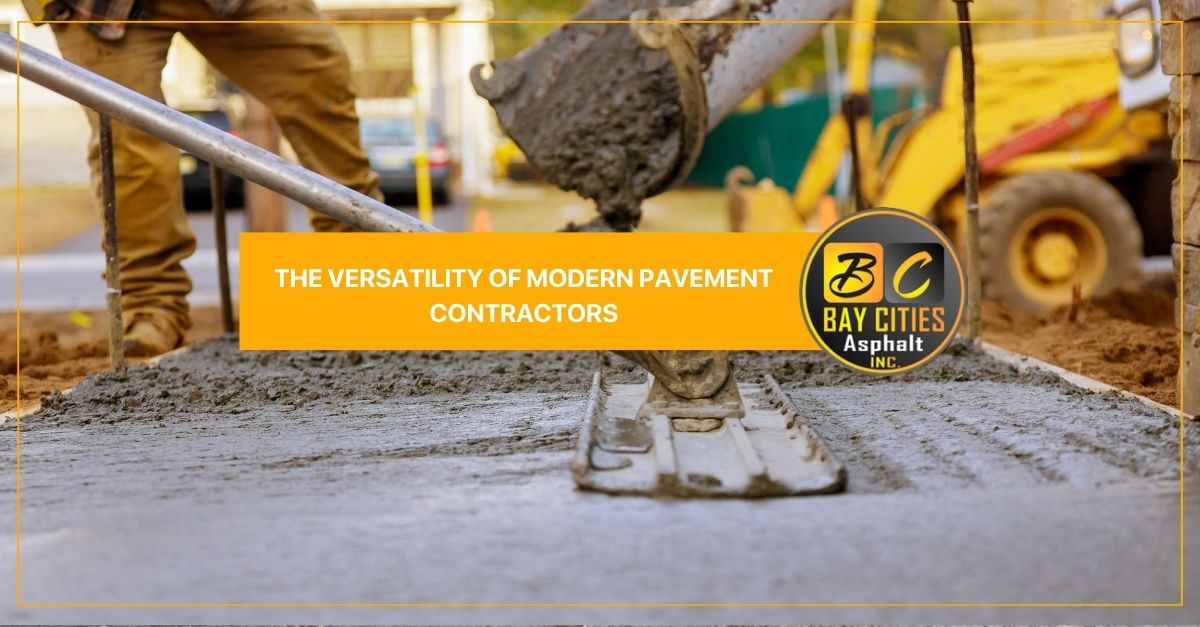
When most people think of a pavement contractor, they picture a crew laying asphalt on a driveway or road. That image, while accurate, only scratches the surface of what today’s paving professionals actually do. The industry has evolved considerably, and contractors now need a diverse skill set to meet the demands of homeowners, business owners, property managers, and municipalities alike.
Bay Cities Asphalt, Inc. is a prime example of this evolution. As a family-owned business now in its third generation, the company has spent two decades building expertise across nearly every corner of the paving world. From driveway replacements to athletic court installations, this kind of longevity comes from adapting to what clients actually need—not just what’s easiest to deliver.
This post breaks down the many services that define a modern pavement contractor, showing just how far the trade has come from its traditional roots.
What Do Traditional Paving Projects Still Involve?
Traditional paving remains the foundation of the industry, and for good reason. Driveways, parking lots, and residential roads still make up a significant share of the work pavement contractors perform daily.
These projects typically involve:
- Site preparation: Grading and compacting the base to prevent future cracking or sinking.
- Asphalt installation: Laying and compacting fresh asphalt to create a smooth, durable surface.
- Sealcoating: Protecting the finished surface from UV rays, water, and chemical spills.
Even though these projects are considered “basic,” they still require precision. A poorly graded base or an uneven asphalt layer can lead to drainage issues, potholes, and costly repairs down the line. Contractors who specialize in replacement and repair, like Bay Cities Asphalt, Inc., understand that getting these fundamentals right is what sets a lasting driveway apart from one that fails within a few years.
How Does Commercial and Industrial Paving Differ from Residential Work?
Commercial and industrial paving projects operate on a different scale entirely. Parking lots, loading docks, and warehouse access roads need to withstand constant vehicle traffic, heavy equipment, and higher volumes of daily use.
This type of work often demands:
- Thicker asphalt layers to handle heavier loads
- Reinforced bases for high-traffic zones
- ADA-compliant striping and accessibility features
- Scheduling flexibility to minimize business disruption
Because commercial clients can’t afford extended downtime, contractors need to plan projects around business hours, coordinate with property managers, and complete work efficiently without sacrificing quality. Choose a contractor with commercial experience if your business relies on uninterrupted access to your lot—residential-focused crews may not have the equipment or scheduling expertise to keep disruption minimal.
What Is Decorative Pavement and Where Is It Used?
Not all paving is purely functional. Decorative pavement has become increasingly popular for homeowners and businesses that want their outdoor spaces to reflect a certain aesthetic.
Common decorative paving options include:
- Stamped asphalt or concrete: Mimics the look of brick, stone, or tile at a fraction of the cost.
- Colored asphalt: Adds visual interest to walkways, patios, and entryways.
- Custom borders and patterns: Used to define spaces like courtyards or garden paths.
Decorative pavement works well for storefronts, community spaces, and upscale residential properties where curb appeal matters as much as functionality.
What Does Asphalt Resurfacing and Rehabilitation Actually Fix?
Asphalt doesn’t last forever. Weather exposure, heavy traffic, and time all take a toll on even the best-installed surfaces. That’s where resurfacing and rehabilitation come in.
Two of the most common techniques are:
- Milling: Removing the top layer of damaged asphalt to prepare for a fresh overlay.
- Overlay: Applying a new asphalt layer over the milled surface to extend its lifespan without a full replacement.
These methods are typically more cost-effective than a full tear-out and replacement, making them a smart choice for property owners looking to restore a surface’s structural integrity without starting from scratch. Choose milling and overlay if the existing base is still structurally sound—opt for full replacement if the damage extends below the surface layer.
Why Are Contractors Getting Involved in Athletic Surface Construction?
Athletic surfaces—tennis courts, basketball courts, running tracks, and multi-use recreational areas—require a level of precision that goes beyond standard paving work. These surfaces need consistent flatness, proper drainage, and specific surface textures to ensure player safety and performance.
Building or resurfacing an athletic court typically involves:
- Precise grading to prevent water pooling
- Specialized asphalt mixes designed for sports use
- Color coating and line striping for regulation play
Schools, parks departments, and private facilities increasingly rely on paving contractors who understand these specialized requirements, rather than hiring separate specialty firms for each project.
How Does Drainage Expertise Prevent Long-Term Pavement Damage?
Water is one of the biggest threats to any paved surface. Without proper drainage planning, standing water can seep into cracks, freeze and expand, and cause significant structural damage over time.
Experienced pavement contractors address this through:
- Grading: Sloping surfaces to direct water away from structures and toward drains.
- Catch basins and drains: Installing systems that capture and redirect runoff.
- French drains: Using underground piping to manage excess water in problem areas.
A contractor who understands drainage isn’t just paving a surface—they’re protecting it. This kind of foresight prevents the kind of water damage that leads to premature cracking, potholes, and costly repairs.
What Kinds of Creative Customization Can Pavement Contractors Offer?
Beyond function and durability, many clients now want their paved spaces to feel personalized. Creative customization has become a growing part of the paving industry, especially for residential and hospitality projects.
Examples include:
- Custom logos embedded in commercial parking lots
- Mixed materials, like combining asphalt with pavers for visual contrast
- Unique color combinations for pathways and outdoor living spaces
These custom touches allow property owners to create spaces that are as visually distinctive as they are practical.
Choosing a Pavement Contractor Built for the Long Haul
The paving industry has grown well beyond simple driveway installations. Today’s contractors need to handle everything from heavy-duty commercial lots to intricate decorative work, athletic surfaces, and complex drainage systems.
Bay Cities Asphalt, Inc. reflects this evolution directly. With two decades of family-owned experience passed down through three generations, the company has built its reputation on replacement, repair, overlay, and milling services throughout the Bay Area—the kind of specialized expertise that comes only from years of hands-on work across diverse project types.


If you’re planning a paving project, whether it’s a small residential driveway or a large-scale commercial lot, take the time to find a contractor with proven versatility. Ask about their specific experience with your project type, request examples of similar past work, and confirm they understand the drainage and grading requirements specific to your site.